Why providing the free Park & Ride is integral to the future success of Oxford’s congestion charge
5 months ago
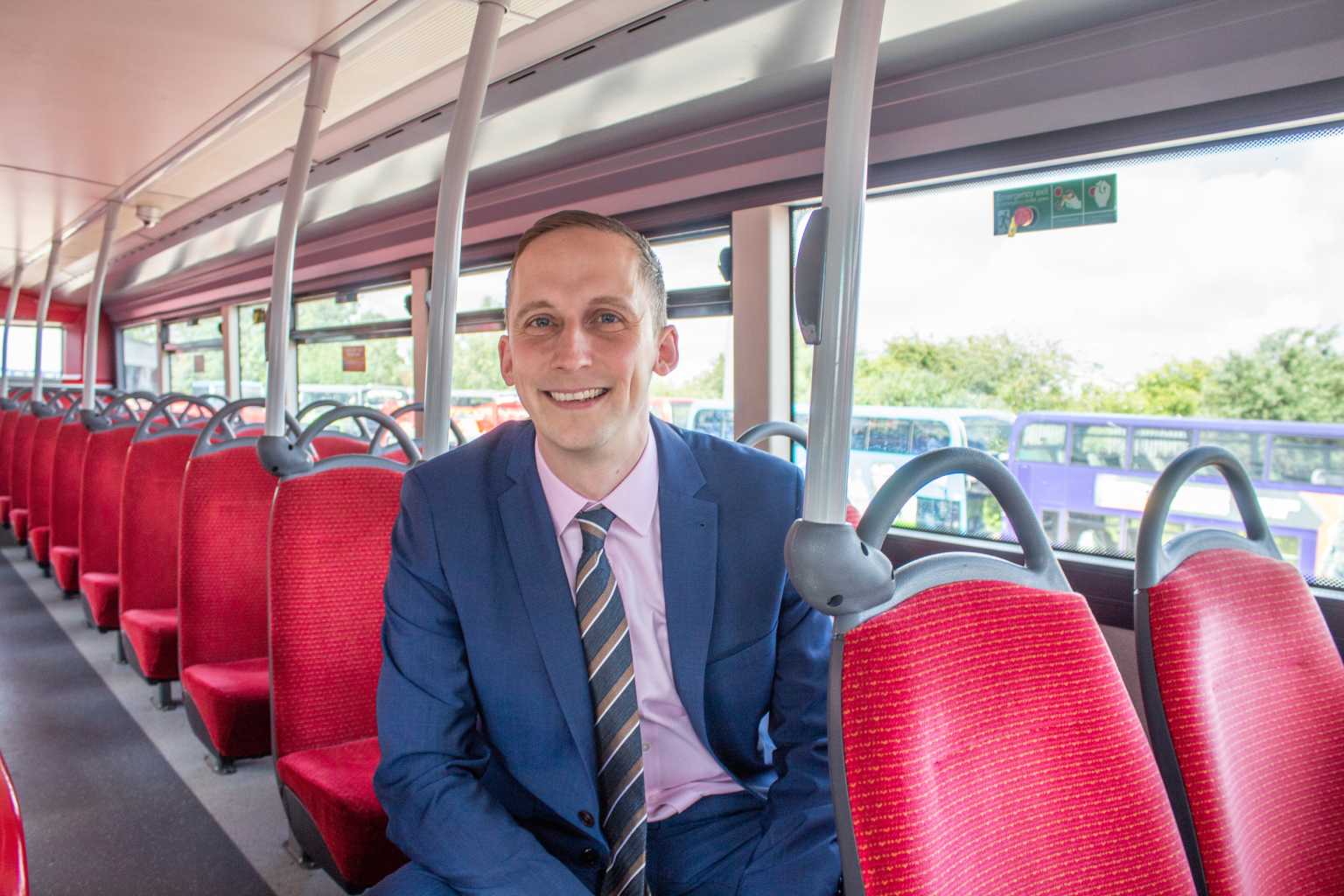
Oxford Bus Company Managing Director Luke Marion wrote a guest article for Oxford Clarion on why providing the free Park & Ride is integral to the future success of Oxford’s congestion charge.
Oxford is a city steeped in history and tradition, and we are all fortunate to live and work in such a wonderful place.
But the city has suffered a chronic congestion problem for too long. The primary routes into Oxford are not equipped to deal with a growing city and region struggling with more and more cars on our roads.
Change has slowly but surely started to arrive, however.
The temporary congestion charge brought in by Oxfordshire County Council at the end of October was a bold approach to tackle the issue head-on, and the early signs are encouraging.
Buses are more productive and running quicker in many parts of the city, with the early promise nowhere more evident than Abingdon Road. A victim of the ongoing Botley Road closure, car traffic rerouted from west to south, leading to substantial increases in journey times.
Since the congestion charge came into force, we’ve seen reduced traffic on Abingdon Road, allowing smoother and more reliable bus journeys.
Times have been tough in recent years for local traders and businesses, with the impact of changing shopping habits, the pandemic and the cost of living sharply felt.
But free Park & Ride has supported city centre businesses, helping to ensure that footfall is not negatively impacted by the congestion charge.
The visitor economy is also crucially important to Oxford, so it’s essential that our city centre attractions and hospitality businesses are able to give clear guidance on the congestion charge to potential customers, as they plan visits over the busy summer period.
It’s why the city needs clarity on the medium-term future of free Park & Ride. The next step must be to make it permanent for the duration of the congestion charge.
All surpluses from the congestion charge scheme are ring-fenced for local transport initiatives, including improving public transport. The county is yet to decide what it wants to spend much of the surpluses on, however the one thing which has been funded so far is free Park & Ride bus travel. This has been one of the overriding positives to come from the temporary congestion charge so far, with people embracing the offer in their thousands.
It’s fantastic that it will be continuing for a further two months as it remains integral to any future success of the congestion charge scheme.
Between the scheme starting on 29th October and 3rd January, 119,172 more journeys were made from Park & Ride car parks on our services, compared to the same period last year.
That represents a 44.6 per cent growth and an additional 10,833 people using Park & Ride each week.
It’s no surprise that Redbridge has been the Park & Ride site with the largest growth (63 per cent) and is currently the city’s busiest Park & Ride. What we are seeing on Abingdon Road is a combination of the ‘carrot’ of the free Park & Ride scheme, and the ‘stick’ of the congestion charge.
The immediate benefits to Oxford are evident – less traffic, less pollution – but there is a bigger picture here.
Making bus travel in Oxford faster, more reliable and more accessible is just the start, with benefits for the wider county too.
Already, major improvements have been made to improve connectivity around Oxford, with faster journeys at peak times as well as better links to key employment areas and hospitals in East Oxford.
There are now more services for Blackbird Leys, Cowley, Headington, Wood Farm, Rose Hill, Littlemore, Summertown and Kidlington than before the congestion charge, while direct links between Littlemore, Rose Hill, Iffley Road and the railway station have been restored on services 3 and 3A.
Routes and services are already working better, and while there have naturally been some teething problems to address, we are keeping things under close review.
These are only possible to deliver with less congestion, and maintaining the free Park & Ride services provides the vital alternative people need to choose to travel more sustainably.
This is just the beginning though. There is scope to do a whole lot more to improve air quality for local communities.
Success of the free Park & Ride, combined with the congestion charge, has given us the confidence to make a further substantial investment into electric buses for Oxfordshire, following the successful electrification of our city fleet in 2024. We expect to introduce a further 13 electric buses to the county’s roads in the first half of 2026 as a result.
Our current electric fleet of 104 vehicles reached a major milestone at the end of 2025, completing 10 million kilometres since launch. That’s equivalent to more than 26 trips to the moon!
Electric buses mean zero tailpipe emissions, so no harmful pollutants and instead cleaner air and a healthier environment.
It isn’t about halting the rights of motorists though – cars certainly have their place and will remain the most sensible mode choice for many journeys – but ensuring that public transport is an attractive alternative for as many journeys as possible.
A sustainable future for a growing Oxford does exist – we just must be bold enough to change our everyday behaviours and make it happen.