£5 million investment to deliver more electric buses to Oxfordshire
6 months ago
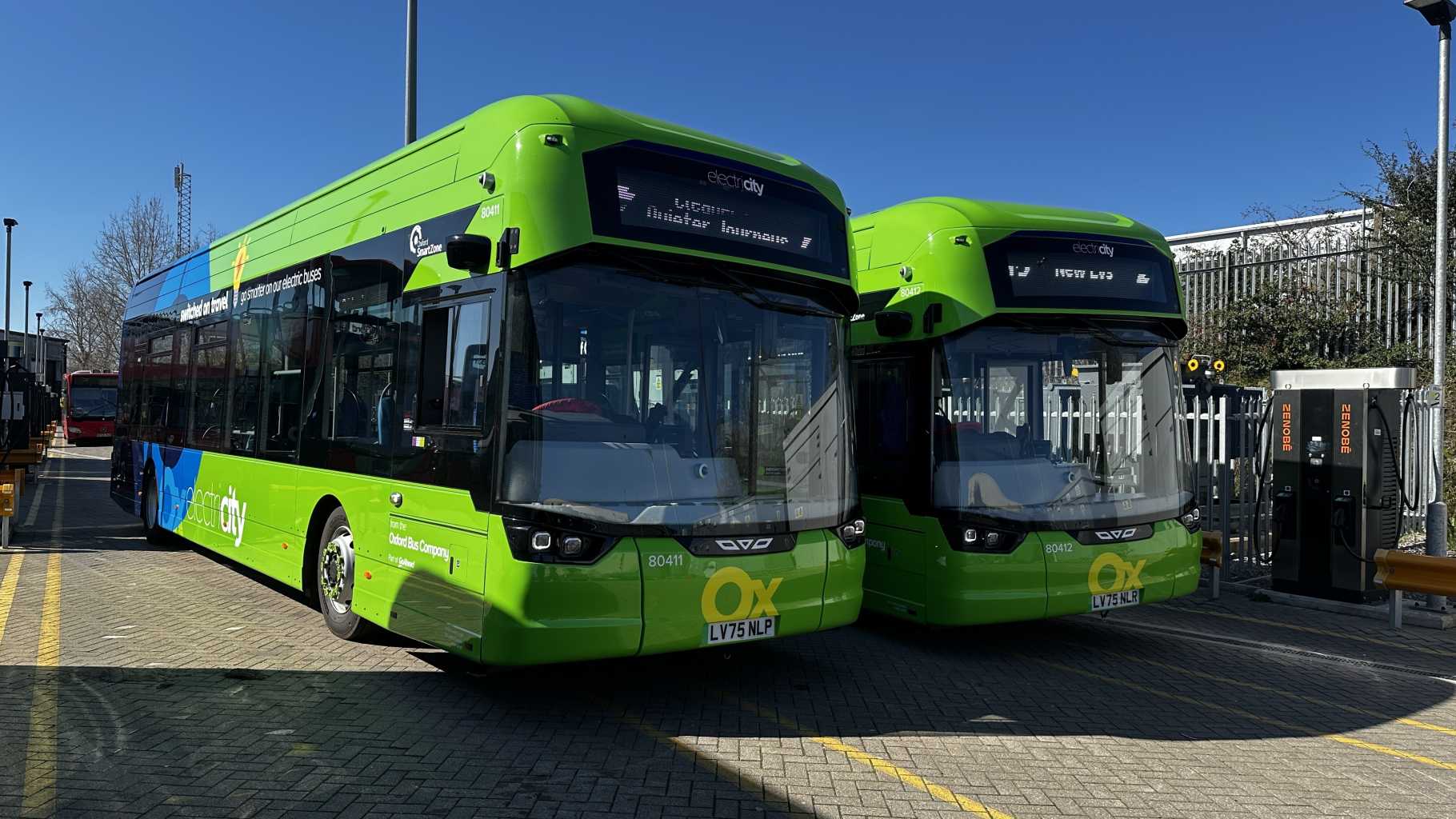
Thirteen new electric buses will soon take to Oxfordshire’s roads following an investment of more than £5.1 million.
The Go-Ahead Group, the parent business of the Oxford Bus Company, has spent £3.9m, backed by a £1.2m investment from Oxfordshire County Council via its Vehicle Improvement Fund grant scheme, which utilises some of the £10m in funding awarded to Oxfordshire by central government to improve bus services in the area.
The investment will enable Oxford Bus Company to expand its fleet of electric buses across the county, helping further improve air quality for local communities.
The bus operator is rolling out nine new large electric single-deckers and four smaller electric single-deckers on routes extending outside the Oxford SmartZone, with the first tranche of vehicles going into service last week.
The buses, which have been produced by UK-based manufacturers Wrightbus and Alexander Dennis, will serve the 35 route to Abingdon, 46 to Great Milton, ST2 to Wytham, and the 21 service between Bicester and Chesterton.
Luke Marion, Managing Director of Oxford Bus Company, said: “This is another major sustainability milestone in our continued strategy to help deliver a significant contribution to improving air quality in the communities we serve.
“The exciting news is it will enable us to operate electric vehicles more widely across the county, rather than mainly on routes within Oxford.
“This further investment is the result of strong partnership working and improving traffic conditions in Oxford, thanks to schemes including the county’s temporary congestion charge and the successful introduction of free travel on the Park & Ride.
“This has led to increasing bus usage, which in turn has given us the confidence to commit to investing further in expanding our electric fleet and I’d like to thank Oxfordshire County Council and Go-Ahead Group for supporting the investment.”
Councillor Andrew Gant, Oxfordshire County Council’s Cabinet Member for Transport Management, said: “This is really good news and an excellent example of partnership working delivering real benefit and value to our residents.
“The purchase of these new electric vehicles, with more improvements to follow, has been made possible by the council’s continued close working relationship with our bus operators through our Enhanced Partnership, soon to be strengthened further.
“We have awarded an element of this year’s bus grant from the government to this project which, alongside a substantial investment from Oxford Bus Company, will see an increase of vehicles on our local network which are zero emission from the tailpipe. Over one third of the services operating in Oxfordshire are now operated by these cleaner and greener buses, contributing to a better climate for all.”
Oxford Bus Company welcomed its first electric bus in March 2020, with a full roll-out of electric vehicles in the city following four years later. It worked in partnership with Oxfordshire County Council, Oxford City Council and Stagecoach to introduce 159 electric buses into service in total in 2024.
The county council was awarded £32.8m from the government’s Zero Emission Bus Regional Areas scheme and contributed £6m directly to the initial 159-bus scheme, while bus operators invested £43.7m.
As part of the original investment, a charging hub was installed at Oxford Bus Company’s Cowley House depot.
By the end of 2025, Oxford Bus Company’s electric vehicles completed 10 million kilometres – equivalent to more than 26 trips to the moon.
Each electric bus delivers significant environmental benefits, primarily through zero tailpipe emissions. This means they do not emit harmful pollutants like nitrogen oxides and particulate matter, which are common in petrol and diesel vehicles.
By reducing these emissions, electric buses contribute to cleaner air and a healthier environment. Pollution experts recently estimated nearly 5,000 premature deaths each year are caused by exhausts from vehicles in the UK.