£1.5 million investment sees electric buses spread benefits further across Oxfordshire
3 months ago
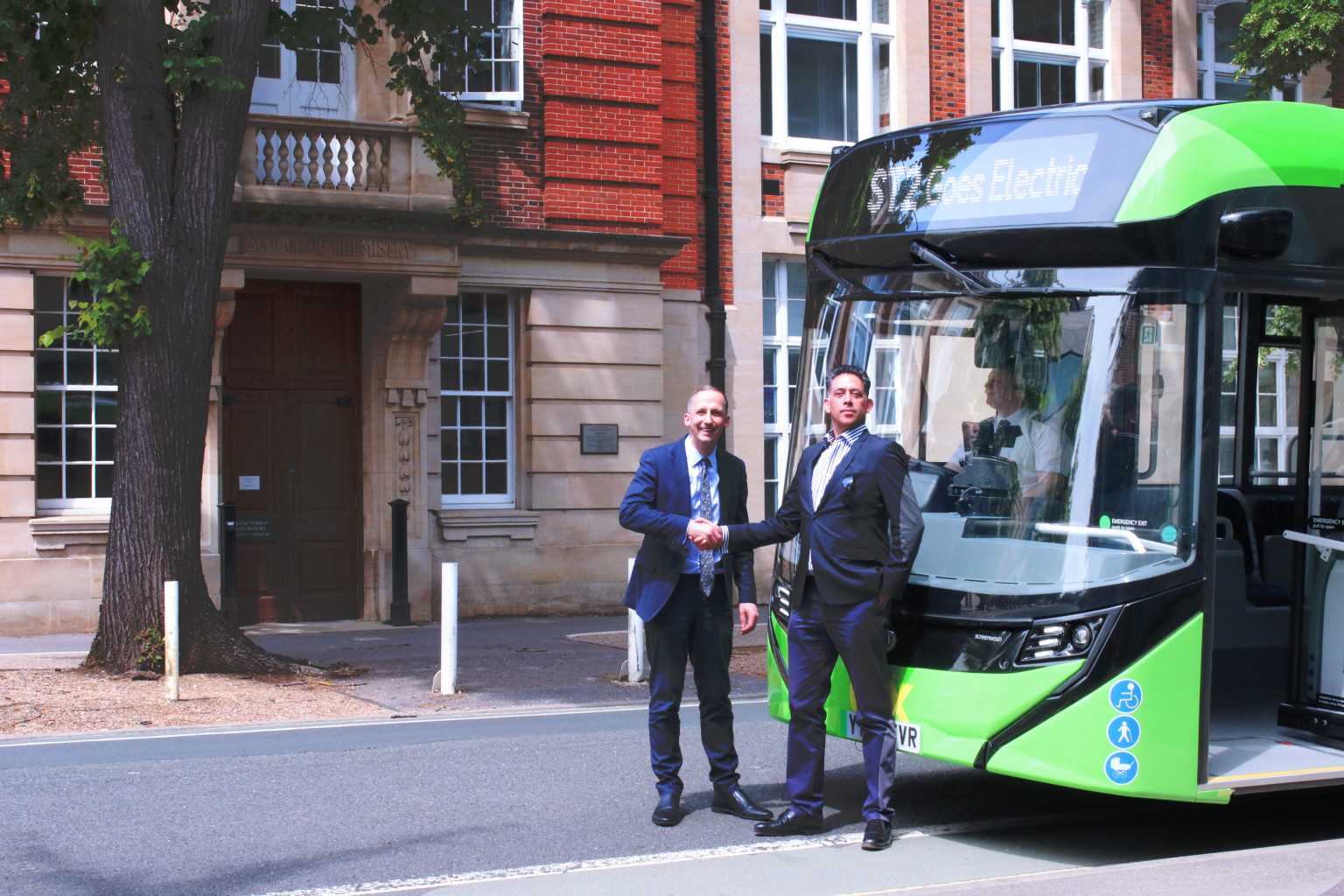
An investment of £1.5 million has enabled Oxford Bus Company to launch four new electric buses on routes across Oxfordshire.
The first of the Alexander Dennis Enviro100 EVs have gone into service, taking the total number of Oxford Bus Company’s electric vehicles to 117.
The £1.5m investment includes £446,000 from Oxfordshire County Council, with the buses to be used on services such as the 46 to Great Milton, ST2 to Wytham and 21 in Bicester.
Produced by British manufacturer Alexander Dennis, the battery electric midibuses hold up to 45 passengers, with 26 seats and have a separate wheelchair and buggy space. The buses also have air conditioning with a zero-emission heat pump.
Luke Marion, Managing Director of Oxford Bus Company, said: “The introduction of these new vehicles will spread the benefits of electric buses further across Oxfordshire into more rural areas such as Great Milton, Horspath and Wytham.
“This marks another important sustainability milestone for the county, helping further improve air quality for local communities.
“Continued strong partnership working has allowed us to reach this point, as we collectively strive to make our roads greener and improve traffic conditions across the county.”
Councillor Gareth Epps, Oxfordshire County Council’s Cabinet Member for Transport, said: “The electric bus fleet goes from strength to strength. It is great news that more areas outside the Oxford ring road will get the benefits of these state-of-the-art vehicles and the improvements in air quality and noise pollution that they bring. We’re proud to be working in partnership to make this happen.”
The latest tranche of electric vehicles to join Oxfordshire’s roads takes the total number of the electric bus fleet to 173. That figure includes Stagecoach’s fleet of electric vehicles.
Oxford Bus Company welcomed its first electric bus in March 2020, with a full roll-out of electric vehicles in the city following four years later. It worked in partnership with Oxfordshire County Council, Oxford City Council and Stagecoach to introduce 159 electric buses into service in 2024.
The county council was awarded £32.8m from the government’s Zero Emission Bus Regional Areas scheme and contributed £6m directly to the initial 159-bus scheme, while bus operators invested £43.7m. As part of the original investment, a charging hub was installed at Oxford Bus Company’s Cowley House depot.
In March, provisional data suggested that roadside nitrogen dioxide concentrations across Oxford were reduced by an average of 10 per cent from 2023 to 2024. That figure was as high as 24 per cent in areas of high bus traffic such as High Street and St Aldates. Each electric bus delivers significant environmental benefits, including zero tailpipe emissions.
The analysis by the Public Health Intervention Responsive Studies Teams, in partnership with the University of Oxford, investigated air and noise pollution changes before, during and after the introduction of battery electric buses in Oxford.
Marco-António Squires-Reis e Moura, Sustainable Transport Officer at the University of Oxford, said: “We are pleased to welcome the arrival of the new electric buses, which are the latest step towards complete electrification of the area’s bus network.
“Decarbonising transport will be a key part of achieving the University’s own strategic goal of reaching net zero by 2035, and we are committed to working with partners including Oxford Bus Company and the County Council to do this.
“Electric buses don’t just help address the climate crisis; they also benefit everyone in the area by reducing particulate air pollution and noise levels, which we now understand cause serious harm to people’s health.
“I’m especially excited that the ST2 route, for which I have some responsibility, moving forward will also have these excellent new buses.”